


GLP-1 Weight Loss
Why Am I Not Losing Weight on GLP-1? 8 Reasons and Fixes
TLDR: All you need to know
TLDR: A weight loss stall on GLP-1 doesn't mean the medication stopped working. It usually means one of 8 specific things is happening — and 7 of them are fixable without changing your dose. Normal plateaus last 2–4 weeks. Body recomposition hides fat loss behind stable weight. Hidden liquid calories sneak in. Sleep debt stalls everything. This post walks through all 8 causes in order of likelihood, with the exact fix for each one.
The first 6 weeks were amazing.
Weight dropping every week. Clothes getting looser. The number on the scale was finally your friend.
Then it stopped.
Week 7: same weight.
Week 8: same weight.
Week 9: actually went UP 2 pounds.
You're panicking. You're googling. You're wondering if you're broken or if the medication wore off.
You're not broken. And GLP-1 doesn't "wear off."
Here are the 8 actual reasons your scale stopped — and what to do about each one.
Reason 1: This Is a Normal Plateau (The Staircase Pattern)
This is the most likely explanation and the one nobody wants to hear.
GLP-1 weight loss is not linear. It follows a staircase pattern:
Drop → stall → drop → stall → drop.
Stalls of 2–4 weeks are physiologically normal. Your body is recalibrating — adjusting hormones, fluid balance, and metabolic rate to your new weight.
The fix: Wait. If your habits haven't changed (eating, water, sleep, movement), the stall will break. Give it 4 full weeks before troubleshooting. Most plateaus break between weeks 2 and 4.
How to tell it's a normal plateau: Your waist is still shrinking. Your clothes still fit better. Your energy is stable. Only the scale is stuck. That's body recomposition, not failure.
Reason 2: You're Losing Fat but Gaining Muscle (Body Recomposition)
If you started strength training around the same time as GLP-1 — or if your body is simply adjusting to carrying less weight — you may be recomposing.
Fat is leaving. Muscle is stabilizing or growing slightly.
Muscle is denser than fat. Your weight stays flat while your body shape changes.
How to confirm: Measure your waist at the belly button every 2 weeks. If your waist is shrinking but the scale isn't moving, you're recomposing. This is the best-case scenario.
The fix: Keep doing what you're doing. This is working. Trust your measurements and photos over the scale.
Reason 3: You're Under-Eating (and It's Slowing You Down)
This one surprises everyone.
You'd think eating less = losing more. Below a threshold, the opposite happens.
Consistently eating under 1,000 calories triggers metabolic adaptation.
Your body slows thyroid output, reduces non-exercise activity (fidgeting, posture), and hoards energy.
You also lose muscle faster, which lowers your base metabolic rate.
How to check: Track your food for 3 days. If you're averaging under 1,000–1,100 calories, you're under-eating.
The fix: Increase to 1,200–1,400 calories. Focus on protein (80–100g). This feels counterintuitive, but eating more — specifically more protein — often restarts weight loss within 1–2 weeks.
Reason 4: Hidden Liquid Calories
The sneakiest stall cause.
You're not counting:
The creamer in your coffee (80 cal × 3 cups = 240 cal).
The juice with breakfast (120 cal).
The wine at dinner (150 cal per glass).
The sweetened iced tea (90 cal).
Total: 600 hidden liquid calories. Every day.
On a 1,300-calorie intake, that's 46% of your daily calories from drinks.
The fix: For one week, drink only water, black coffee, and unsweetened tea. Nothing else. If the scale starts moving again, you found your culprit.
Reason 5: You're Not Sleeping Enough
Sleep debt is the most underrated weight loss blocker.
Under 7 hours of sleep per night:
Increases cortisol by 15–20% (cortisol promotes fat storage, especially abdominal).
Increases ghrelin (hunger hormone) by 14%.
Decreases leptin (fullness hormone) by 18%.
Reduces insulin sensitivity — your GLP-1 medication becomes less effective.
The fix: 7–8 hours minimum. Non-negotiable. Prioritize sleep over exercise if you have to choose. A patient who sleeps 8 hours and skips the gym will lose more weight than a patient who sleeps 5 hours and runs every morning. Research confirms that insufficient sleep undermines weight loss efforts.
Reason 6: Your Dose Isn't High Enough Yet
This is the reason most patients jump to first. It's actually #6 on the list.
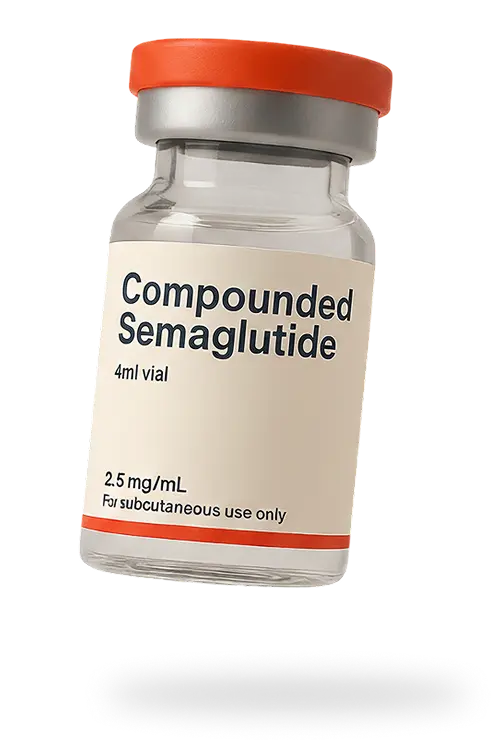
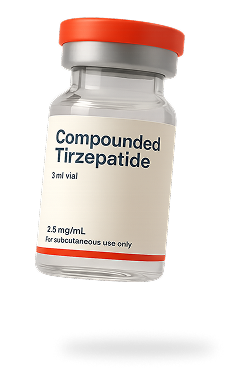
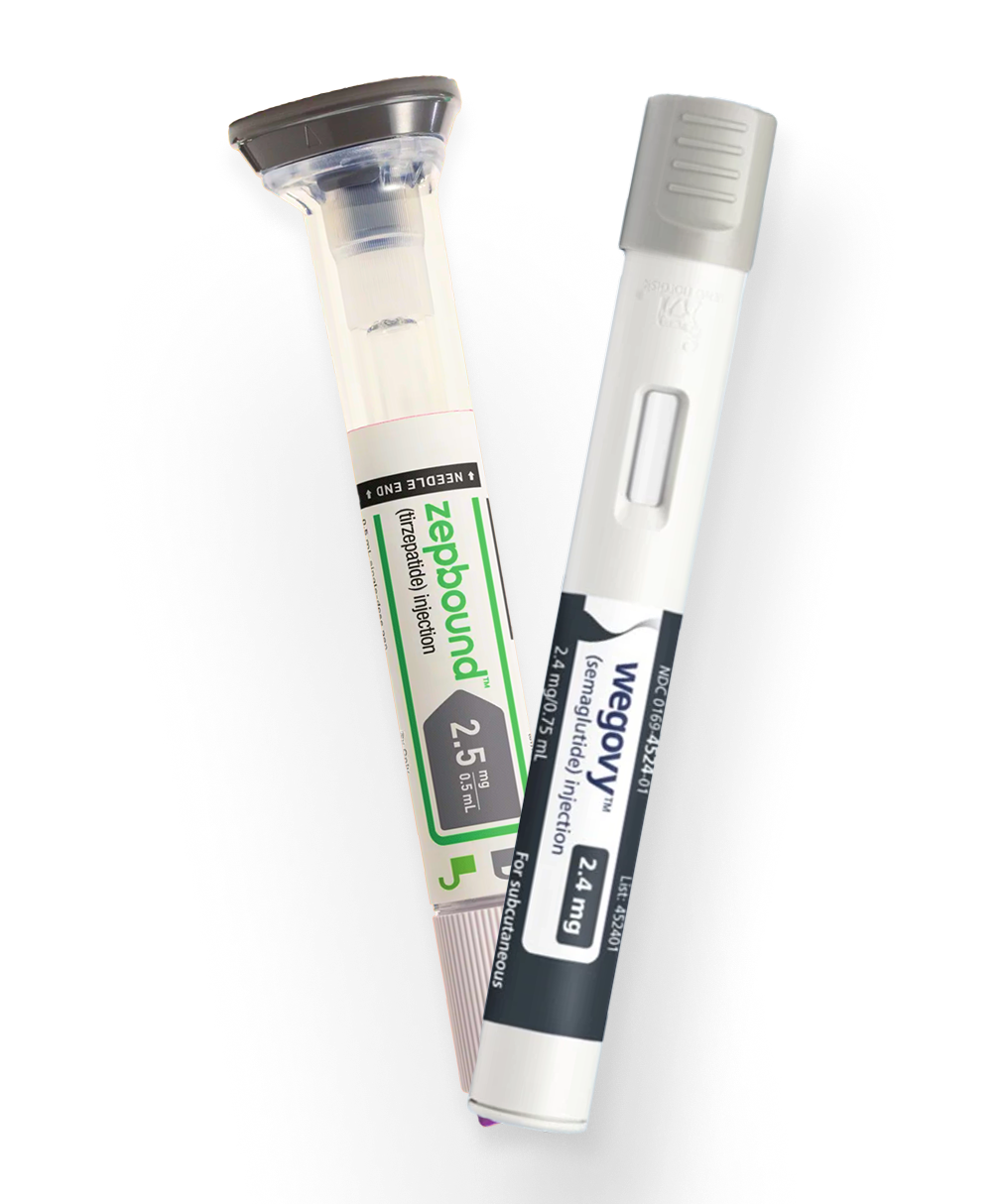
Starting doses (semaglutide 0.25mg, tirzepatide 2.5mg) are titration doses. They're not expected to produce maximum weight loss. They help your body adjust.
Therapeutic doses for weight loss:
Semaglutide: 1.7–2.4mg weekly.
Tirzepatide: 10–15mg weekly.
If you're still on a low or mid-range dose, the medication may simply need more time to reach its effective level.
The fix: Talk to your provider about your dose timeline. Don't rush increases (faster isn't better — it just means more side effects). But if you've been on the same dose for 8+ weeks and haven't lost weight, a dose adjustment may be appropriate.
Reason 7: Stress Is Blocking Your Progress
Chronic stress elevates cortisol. Elevated cortisol:
Promotes visceral fat storage (especially abdominal).
Increases water retention (you gain "weight" that isn't fat).
Triggers emotional eating patterns even when GLP-1 suppresses physical appetite.
Disrupts sleep (see Reason 5).
Major life stressors — job changes, relationships, financial pressure, family issues — can stall weight loss for weeks regardless of what you eat.
The fix: Cortisol management: 10-minute daily walk, 7–8 hours sleep, limit caffeine to 2 cups before noon, and one stress-management practice (journaling, deep breathing, therapy). You can't eliminate stress. You can reduce cortisol's effect on your weight.
Reason 8: A Medical Condition Is Interfering
If reasons 1–7 don't apply, there may be an underlying condition slowing your progress.
| Condition | How It Stalls Weight Loss | What to Test | How Common |
|---|---|---|---|
| Hypothyroidism | Slows metabolism. Weight loss resistant despite caloric deficit. | TSH, free T4 | Common — especially in women. GLP-1 can unmask subclinical cases. |
| PCOS | Insulin resistance promotes fat storage independent of calorie intake. | Fasting insulin, HOMA-IR, testosterone | Affects 1 in 10 women. GLP-1 actually helps most PCOS patients. |
| Cushing's syndrome | Excess cortisol drives central fat storage. | 24-hour urinary cortisol, late-night salivary cortisol | Rare but mimics stubborn central weight gain. |
| Medication interactions | Certain antidepressants, steroids, insulin promote weight gain. | Medication review with provider | Check all meds, including OTC and supplements. |
| Severe insulin resistance | Body stores fat aggressively despite caloric deficit. | Fasting insulin, HOMA-IR, A1C | More common than diagnosed. May need dose increase or metformin addition. |
The fix: Ask your provider to run a full metabolic panel: TSH, free T4, fasting insulin, HOMA-IR, A1C, cortisol. These tests rule out (or reveal) the medical causes. If you've stalled for 6+ weeks despite solid habits, this lab draw is the next step. Research on thyroid dysfunction and weight management supports routine screening.
The "Why Am I Stalled?" Checklist (Work Top to Bottom)
Tip: Screenshot this table and keep it in your phone.
| Step | Check This | If Yes… | If No… |
|---|---|---|---|
| 1 | Has it been less than 4 weeks? | Wait. Normal plateau. Re-check in 2 weeks. | Move to step 2. |
| 2 | Is your waist still shrinking? | You're recomposing. Keep going. Scale will catch up. | Move to step 3. |
| 3 | Are you eating 1,200+ cal / 80g+ protein? | Good. Move to step 4. | Under-eating. Increase food. Recheck in 2 weeks. |
| 4 | Are you drinking ONLY water/coffee/tea? | Good. Move to step 5. | Cut all liquid calories for 1 week. See what happens. |
| 5 | Are you sleeping 7+ hours? | Good. Move to step 6. | Fix sleep first. Recheck in 2 weeks. |
| 6 | Are you at a therapeutic dose? | Good. Move to step 7. | Discuss dose increase with your provider. |
| 7 | Is chronic stress managed? | Good. Move to step 8. | Add stress management. Walk, sleep, breathe. |
| 8 | Have you done a full metabolic panel? | Review results with your provider. | Request one. Rule out thyroid, PCOS, insulin resistance. |
Work top to bottom. Most patients find their answer in steps 1–4 and never need to reach step 8.
The Mistake: Changing Everything at Once
You stall for 2 weeks.
You panic and cut calories to 800. Start running 5 miles. Switch your injection day. Drop carbs to zero.
Now nothing works because you changed 4 variables at once.
You have no idea which change helped and which hurt.
The fix: Change one thing at a time. Wait 2 weeks after each change. Then evaluate. If you cut liquid calories and the stall breaks, that was the problem. If you fix sleep and the stall breaks, that was it. One variable at a time gives you data. Four at once gives you chaos.
Try This Tonight
Print (or screenshot) the checklist above.
Start at step 1 and work down honestly.
For most people, the answer lives in one of these:
Not enough time. You're only 2–3 weeks into a plateau. Wait it out.
Not enough food. You're eating 800 calories and your body has slowed down.
Not enough water. Liquid calories are hiding 400–600 calories per day.
Not enough sleep. Under 7 hours is sabotaging everything else.
Fix the first one that applies. Give it 2 weeks. Then reassess.
FAQ
Q: How long is a normal weight loss plateau on GLP-1?
A: 2–4 weeks is normal at any dose level. The body adjusts to a new weight by temporarily resisting further loss (hormonal recalibration, water balance, metabolic adaptation). If your habits are solid, the stall will break. If it lasts 6+ weeks, investigate further using the checklist above.
Q: Should I increase my dose if I'm not losing weight?
A: Not automatically. Dose is reason #6 of 8 on this list. First check: time (are you still in a normal 2–4 week plateau?), food intake (eating enough protein?), liquid calories, sleep, and stress. If all are solid after 6–8 weeks at the same dose, then discuss a dose increase with your provider.
Q: Can GLP-1 stop working?
A: GLP-1 doesn't "stop working." What happens: your body reaches a new equilibrium where your reduced intake matches your reduced metabolic needs at your lower weight. This is expected. It may mean you've reached your medication's effective range, or it may mean a dose increase is needed. It does not mean the drug failed.
Q: My weight went UP on GLP-1. What happened?
A: Usually water retention. Hormonal changes (menstrual cycle), high sodium intake, starting new exercise (muscles retain water), constipation, and sleep debt all cause temporary weight gain of 2–5 lbs. If weight goes up for 3+ weeks despite solid habits, talk to your provider.
Q: How do I know if my weight loss stall is a medical issue?
A: If you've been stalled for 6+ weeks, you're eating 1,200–1,400 calories with 80g+ protein, sleeping 7+ hours, drinking 64+ oz water, and liquid calories are eliminated — ask your provider for a metabolic panel: TSH, free T4, fasting insulin, HOMA-IR, A1C, and cortisol.