


Tirzepatide Side Effects
B6 and Nausea on Tirzepatide: The Science Behind the Combination
TLDR: All you need to know
TLDR: Nausea affects up to 30% of tirzepatide patients. Vitamin B6 (pyridoxine) reduces nausea by supporting serotonin and dopamine synthesis in the gut and brain — the same mechanism OB-GYNs have used for pregnancy nausea for decades. Some compounding pharmacies now add B6 directly to tirzepatide formulations so patients get anti-nausea support built into every injection. Here's how it works and what patients report.
You started tirzepatide expecting weight loss.
You got it. Along with nausea that makes every meal feel like a negotiation.
Ginger chews help a little. Eating bland food helps a little.
But what if the anti-nausea support was already in your injection?
That's the idea behind tirzepatide + B6 formulations. And the science behind it isn't new — it's borrowed from 40 years of pregnancy nausea research.
Why Tirzepatide Causes More Nausea Than Semaglutide
Both medications slow gastric emptying. Both act on brain appetite centers.
But tirzepatide has an additional mechanism: GIP receptor activation.
GIP + GLP-1 dual action = stronger appetite suppression. That's why tirzepatide produces greater weight loss (up to 22.5% in SURMOUNT-1 vs. 15–17% for semaglutide).
The trade-off: stronger gut signaling means more GI disruption. In clinical trials, nausea affected 24–31% of tirzepatide patients at higher doses, compared to 15–20% on semaglutide.
Most nausea resolves with titration. But for the patients who struggle through weeks 1–8, B6 can make the difference between staying on the medication and quitting.
How B6 Reduces Nausea (The Mechanism)
| What B6 Does | How It Reduces GLP-1 Nausea |
|---|---|
| Supports serotonin synthesis | 50–95% of your body's serotonin lives in the gut, not the brain. GLP-1 medications stimulate gut serotonin receptors (5-HT3), which triggers the nausea signal. B6 helps regulate serotonin production so the signal isn't as overwhelming. |
| Supports dopamine production | Dopamine counterbalances the nausea signal. B6 is a cofactor in dopamine synthesis. Adequate B6 = better dopaminergic buffering against GI distress. |
| Reduces neural excitability | B6 supports GABA production (your calming neurotransmitter). Calmer neural signaling = less amplification of the nausea signal from gut to brain. |
| Addresses deficit from caloric restriction | GLP-1's caloric deficit reduces B6 intake from food. Lower B6 = weaker anti-nausea defenses at exactly the moment you need them most. |
🧸 The pregnancy parallel: OB-GYNs have prescribed B6 (pyridoxine 25–50mg) as a first-line treatment for pregnancy nausea since the 1980s. The ACOG recommends it as initial therapy before stronger antiemetics. The mechanism is the same: serotonin regulation in the gut. GLP-1 nausea and pregnancy nausea share overlapping pathways — which is why the same vitamin helps.
Tirzepatide + B6: What Compounding Pharmacies Are Doing
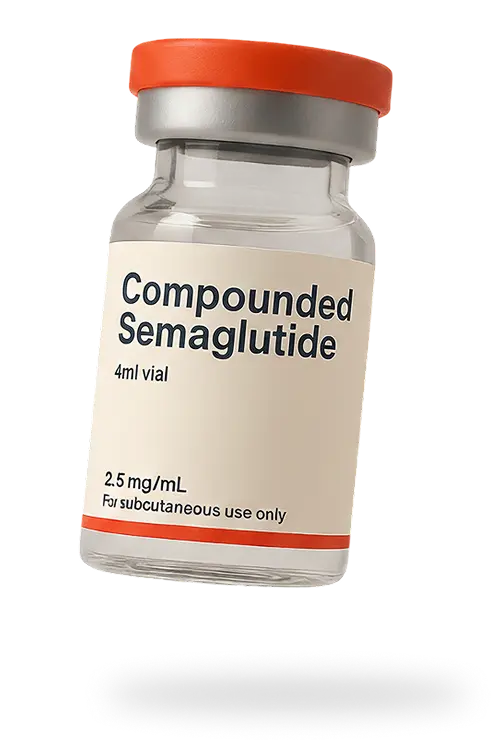
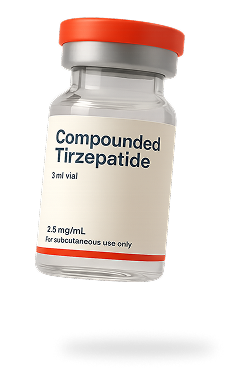
Some compounding pharmacies now add pyridoxine (B6) directly into the tirzepatide vial.
What this means for patients: every injection delivers both the medication and the anti-nausea support in one shot. No extra pill to remember. No separate supplement timing. The B6 is co-administered at the exact moment the tirzepatide enters your system.
| Plain Tirzepatide | Tirzepatide + B6 | |
|---|---|---|
| Nausea management | Separate: ginger, bland food, timing adjustments, OTC remedies | Built-in: B6 delivered with every injection + you can still layer other strategies on top |
| Extra steps for patient | Must remember separate anti-nausea strategies | Anti-nausea support is automatic |
| B6 coverage | Patient responsible for dietary intake or supplementation | Guaranteed adequate B6 with each dose |
| Best for | Patients with mild or no nausea | Patients prone to GI side effects, dose-increase nausea, or history of quitting GLP-1 due to nausea |
What Patients Report
These are common patient reports, not clinical trial data. Individual experiences vary.
During titration (weeks 1–8): "Nausea was still there at dose increases, but shorter. 24–36 hours instead of 4–5 days. I could function."
At therapeutic dose: "I barely notice GI side effects anymore. My first round on Mounjaro without B6 was miserable. This time is completely different."
Overall tolerance: "I almost quit tirzepatide the first time because of nausea. The B6 formulation is why I stayed on it the second time."
Can You Just Take B6 Separately?
Yes. If your tirzepatide doesn't include B6, you can supplement it.
- Dose25–50mg pyridoxine daily. Start at 25mg.
- TimingTake with breakfast, or 30–60 minutes before your injection on injection day.
- FormAny standard B6 supplement. Pyridoxine HCl is the most common and well-absorbed form.
- CostUnder $8 for a 3-month supply.
⚠️ Safety note: Don't exceed 100mg/day long-term. High-dose B6 (200mg+) over months can cause peripheral neuropathy. 25–50mg is the therapeutic range for nausea and is well-established as safe.
The advantage of having B6 in the formulation: you don't have to think about it. It's automatic. But if your pharmacy doesn't offer it, a standalone B6 supplement achieves the same effect.
The Mistake: Suffering Through Nausea as "Just Part of the Process"
Some nausea during titration is expected.
4–5 days of debilitating nausea at every dose increase is not "normal — just push through."
Patients who push through severe nausea without support are 2–3x more likely to quit the medication entirely. Quitting means the weight loss stops.
The fix: Use every tool available — B6 (in your formulation or as a supplement), eating before your injection, ginger, bland small meals, hydration. Nausea should be managed, not endured. Staying on the medication is the goal, and B6 is one of the cheapest, safest tools to help you do that.
Try This
If tirzepatide nausea is affecting your quality of life:
Option 1: Ask your provider about a compounded tirzepatide formulation that includes B6.
Option 2: Add B6 25mg daily as a standalone supplement. Take with breakfast. Track nausea 1–10 for 2 weeks.
Most patients who add B6 report a 30–50% reduction in nausea severity within the first 1–2 weeks.
FAQ
Q: Does B6 reduce the effectiveness of tirzepatide?
A: No. B6 does not interfere with tirzepatide's mechanism. It supports serotonin and dopamine pathways that manage the nausea signal. The weight loss and insulin benefits are unaffected.
Q: Why don't brand-name Mounjaro and Zepbound include B6?
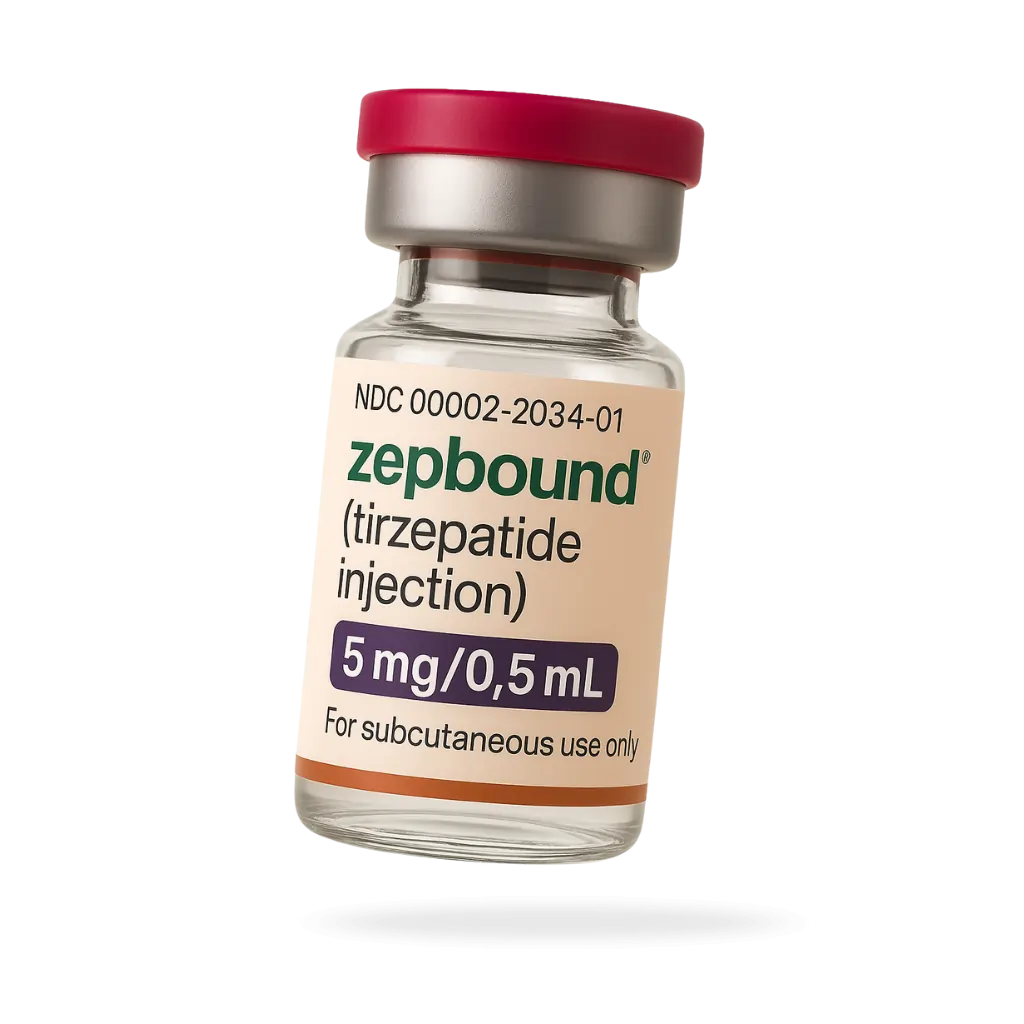
A: Brand-name manufacturers produce a single standardized formulation. Adding vitamins would require separate FDA approval processes. Compounding pharmacies can customize formulations, which is why they're able to add B6 to the compounded version.
Q: Does B6 help with semaglutide nausea too?
A: Yes, through the same mechanism. However, semaglutide formulations are more commonly paired with B12 for energy and methylation support. B6 can be taken as a separate supplement alongside semaglutide if nausea is an issue.
Q: How long do I need to take B6 for tirzepatide nausea?
A: Through the titration phase and the first 2–3 months at your therapeutic dose. Most nausea resolves by month 3–4 as your body adapts. Some patients taper B6 after adaptation. Others continue at 25mg long-term — there's no reason to stop if it's helping.